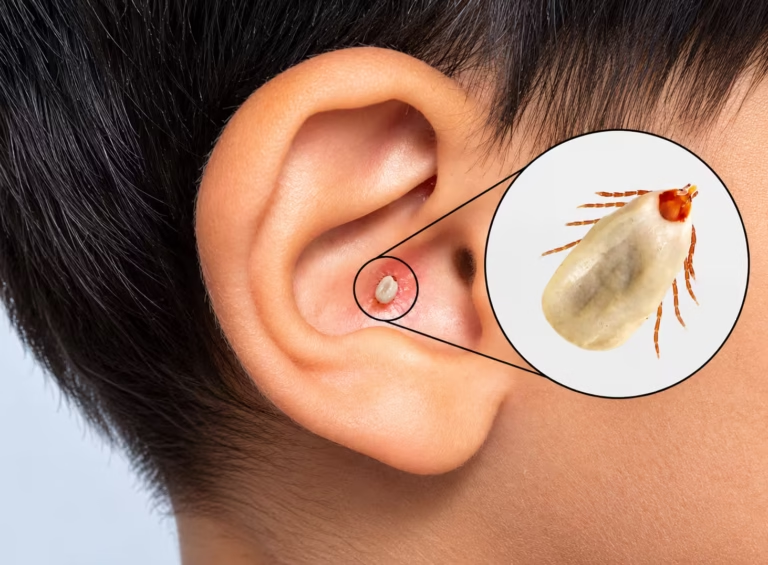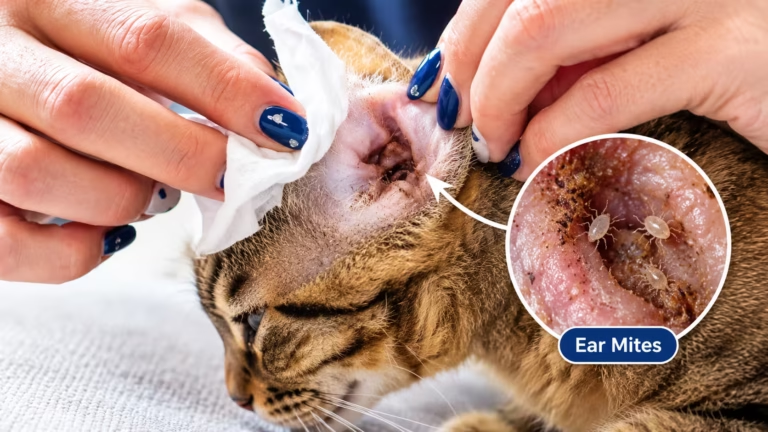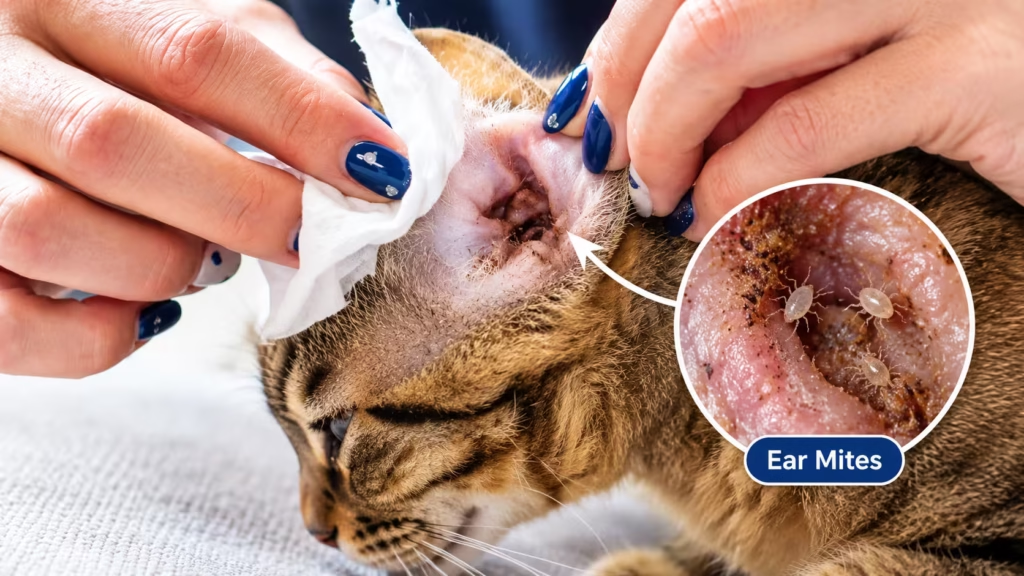


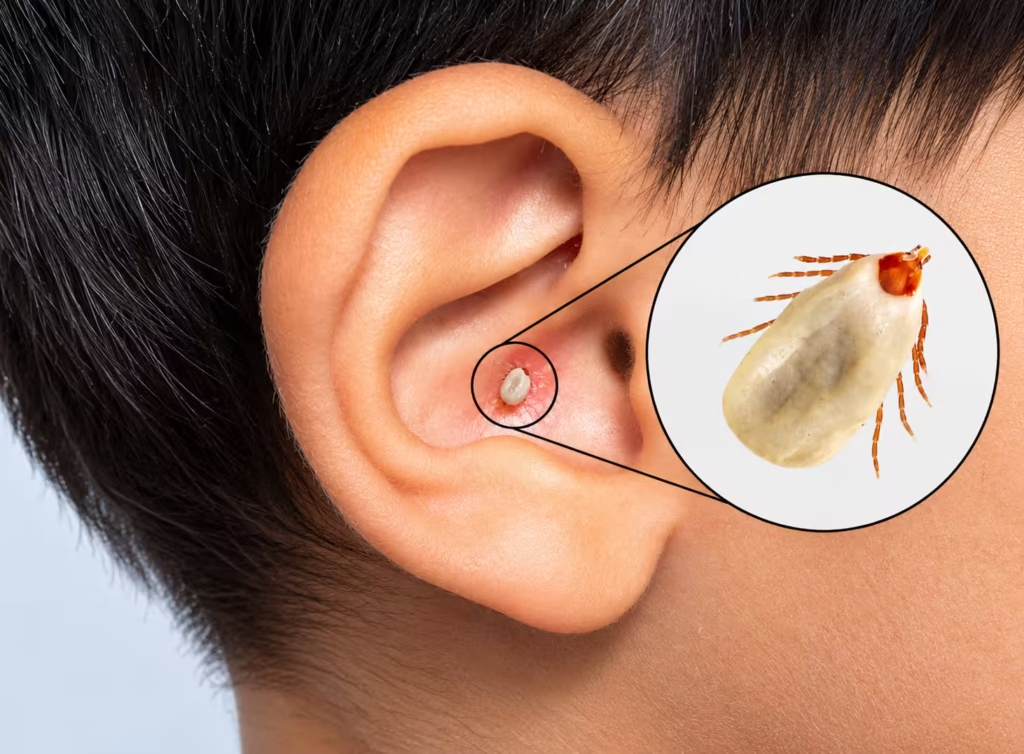
Yes, humans can get ear mites from pets, but it happens rarely. Pet ear mites (Otodectes cynotis) live mainly on cats and dogs, so people are not their usual host. Our vets describe human infestation as rare and short-lived, yet doctors have reported a few rare cases.
Can Humans Get Ear Mites From Cats and Dogs?
Yes, but it is rare. The Companion Animal Parasite Council (CAPC) says people have only rarely been infested with ear mites. Ear mites in humans are a short-lived infestation that researchers have shown experimentally but that probably rarely happens in real life.
Dr
Mites spread through close contact. You can pick them up when you hold, cuddle, or groom an infested pet, and bedding or grooming tools can also carry them.
Cats are the main source. Cats get ear mites more often than dogs, and one cat can carry more than 1,000 mites in a single ear. A seven-country European survey found mites in 17.4% of pet cats, while up to 6.7% of pet dogs had them.
Cat ear mites and dog ear mites belong to the same species, so both animals can pass mites to you. The ear canals of cats, dogs, foxes, and ferrets remain the mite’s real home, and case reports describe mites on a person’s outer ear rather than a long-term nest deep inside the canal.
What Happens If Humans Get Ear Mites?
Mites do not thrive on people. The human ear does not provide a proper environment for ear mites to reproduce. If the mite from any pet transfers to a person’s ear they can cause itching and will eventually die. Untreated ear problems can damage the ear canal and reduce hearing, so you should not ignore your symptoms.
A 2024 case in the journal CosmoDerma shows what this can look like. A 39-year-old painter had a scaly, crusted patch on the upper rim of his left ear. A skin scraping showed a mite, and an entomologist identified it as Otodectes cynotis. Doctors prescribed oral ivermectin, antibiotics, and a steroid cream called mometasone, but the report does not state the final outcome.
Symptoms of Ear Mites If a Human Gets Infested
Symptoms are not specific to mites, but these most often include:
- Itching: It can cause itchiness and redness around the ear.
- A crawling sensation: Some people feel movement in or near the ear.
- Pain and irritation: Ear pain can appear along with an itchy rash.
- Ringing or tinnitus: Ringing or unusual ear sounds.
- Discharge or blockage: You may notice dark earwax, fluid, or a feeling of fullness or pressure in the ear.
How Do Humans Get Ear Mites From Pets?
You get them mainly through close contact with an infested cat or dog. Your risk rises when you share a bed with a pet or let it lie on your furniture, and pressing your face against an affected ear also puts you close to the mites.
Bedding and furniture may play a small role. Mites can spread through bedding and grooming equipment, and it adds that most life stages survive only a few days off the host under normal conditions. Cool, damp conditions may extend that time, but the environment is not thought to be a major source of spread.
You do not need to worry about catching mites from other people.
How Can You Tell If You Have Ear Mites or Another Ear Problem?
You cannot tell by symptoms alone. Earwax buildup, swimmer’s ear, eczema, psoriasis, contact dermatitis, and other infections can cause the same signs, so a mite is only one possible explanation.
Swimmer’s ear causes itching, redness, drainage, and pain that worsens when you tug the outer ear. Later symptoms include muffled hearing, a blocked canal, and fever, and these can look very similar to an ear mite problem.
Eczema and contact dermatitis mainly cause itchy, irritated skin around the ear, while earwax buildup often creates a blocked feeling. Mites may add dark earwax.
How Are Ear Mites Diagnosed in Humans?
Start with your family doctor. The doctor will likely refer you to an ear, nose, and throat (ENT) specialist, who looks inside your ear canal with an otoscope and may take a swab.
Doctors can also examine a sample under a microscope. In the CosmoDerma case, doctors scraped the affected skin, mixed it with 10% potassium hydroxide, and found the mite under magnification.
Tell your doctor if your pet has a confirmed ear mite diagnosis, because that history helps the doctor focus the exam. See a doctor if ear itching lasts after contact with an infested pet.
How Are Ear Mites Treated in Humans?
A doctor treats the problem. The doctor flushes your ear canal with saline to remove wax and debris, and you may then receive antiparasitic ear drops that kill live mites and eggs. Other drops can ease itching, infection, and inflammation, and antibiotics may follow if bacteria take hold.
Treatment varies by patient. The patient may receive oral ivermectin, antibiotics, and mometasone cream. Drops containing antifungal, antibacterial, anti-inflammatory, and anti-mite medicines can be very effective.
Never use your pet’s ear medicine on yourself. Veterinary products are made for specific animals and weights.
Avoid cleaning your ears at home. Do not use cotton swabs, oil, and peroxide, which can push debris deeper or irritate the skin.
How to Prevent Ear Mites From Spreading From Pets to Humans
Take your pet to a veterinarian first. You should treat all dogs and cats in the home once you find mites in one. The cycle from egg to egg lasts 18 to 28 days, so your vet may repeat treatment after three weeks to kill newly hatched mites.
Reduce close contact while your pet is under treatment. Avoid sharing your bed, and keep your face away from the affected ear.
Wash pet bedding, toys, and grooming items regularly. Wash your hands after you touch your pet’s ears, ear debris, or medication.
When Should You See a Doctor About Possible Ear Mites?
See a doctor if ear itching continues after contact with an infested pet. Get checked for ear pain, unusual discharge, or a crawling sensation that does not go away.
Seek urgent care for sudden hearing loss, severe dizziness, or fast-worsening symptoms.
Do not wait for symptoms to turn severe. A doctor can separate mites from infections and other ear disorders.
Frequently Asked Questions About Humans Getting Ear Mites
Can humans get ear mites from cats and dogs?
Yes, but rarely. Cats are a common source of exposure because they get ear mites more often than dogs, and close contact such as cuddling or sharing a bed raises your chances.
Can ear mites live in human hair?
Dr. Faheem Ghaffar, DVM, says pet ear mites live mainly in animal ear canals, although they sometimes appear on an animal’s head, face, and neck. They do not infest human hair. Other mites, such as scabies mites, are different species.
Can ear mites live in human ears permanently?
It is not a lasting infestation, and the problem is short-lived. If your symptoms continue, see a doctor, because another condition may be causing them.
Can ear mites cause hearing loss in humans?
Ear symptoms can affect hearing and damage the ear canal if left untreated. Hearing loss has many causes, so you need a medical exam to find yours.
Can you see ear mites with the naked eye?
Barely. Adult female mites measure about 500 by 300 micrometres, so a doctor’s exam is more reliable than trying to spot them yourself.
Do ear mites go away on their own in humans?
Do not count on it. You cannot judge symptoms or mite presence without an exam, so see a doctor rather than waiting for the problem to clear.
Should I treat my cat if I think its ear mites affected me?
Yes, take your cat to a veterinarian for diagnosis and treatment. Your own symptoms need a separate check by a human doctor(MBBS).
Sources:
- Companion Animal Parasite Council: Otodectic mite guideline
- University of Saskatchewan, Western College of Veterinary Medicine: Otodectes cynotis
- Today’s Veterinary Practice: Ear Mites: Uncovering, Treating, and Preventing Infestations
- Healthline: Ear Mites in Humans
- WebVet: Can humans get ear mites from cats?
- Mayo Clinic: Swimmer’s ear
- NIDCD: Sudden deafness
- Fox News: Ear mites case a rarity, report finds (summarizing the New England Journal of Medicine case)