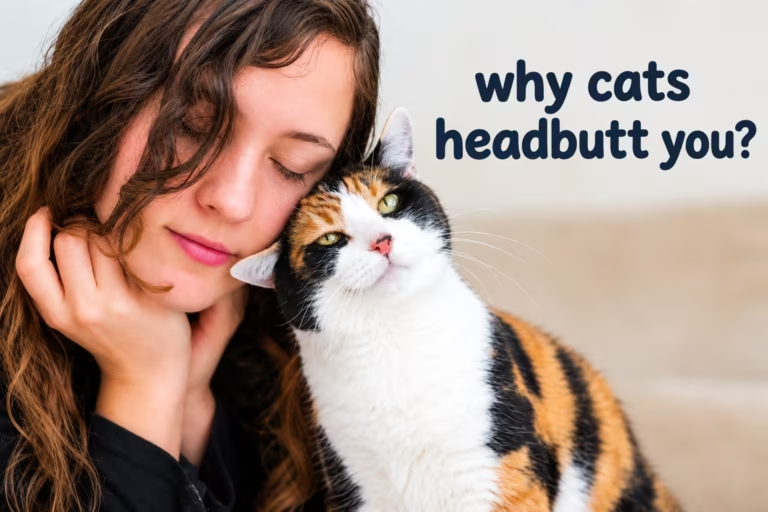


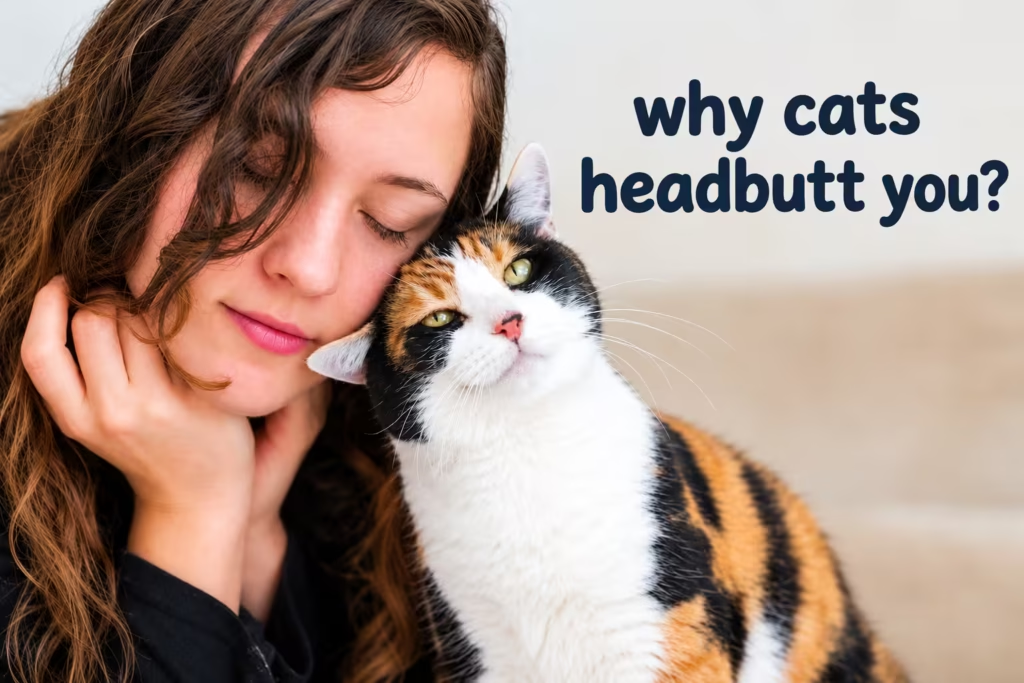
Cats headbutt to communicate trust and to make you their own. Cats have glands in their forehead and cheeks that release a scent humans can’t detect, so each bump means you’re safe and known. It is also a greeting, as cats do when they rub against other cats in a group they belong to. In some cases, cats headbutt to get what they want, whether it’s food, attention, or opening a closed door. If yours does it near mealtime, that’s normally the reason.
While most headbutting is normal and harmless, it isn’t always the case. If a cat is pushing his head against the wall or corner and resting there, he is not headbutting! This is called ‘head pressing’ and may indicate a serious health condition that needs veterinary attention immediately. Here is why cats headbutt you.
“When a cat gently headbutts you, they’re usually communicating comfort and familiarity. Bunting allows cats to share their scent while reinforcing a social bond, so this small gesture can be a meaningful part of how they interact with people they trust.” Says Dr. Amina Ramzan, DVM, Veterinary Consultant at VirtualVetDesk.
What Exactly Is Cat Headbutting (Bunting)?
Cat bunting describes the normal behavior of your cat pressing its head, face, or cheeks against you, other animals, or objects around your house. If your cat approaches you with this gentle gesture, they are engaging in a very advanced method of communication that’s been hardwired into their systems for centuries.
Unlike some automatic behaviors animals display, your cat consciously chooses to bunt you, which makes it even more special when it happens.
Domestic cats are not the only cats who exhibit this behavior. Wild cats and even big cats like lions use bunting as a way of acknowledging and keeping their family members. You’re seeing the same kind of social bonding that is vital to feline relationships within the species.
How Cats “Mark” You with Headbutts
Your cat bunts you for a reason, and it’s not something you can see. Your cat has scent glands all over their face and head, on their chin, lips, forehead, and cheeks. They’re not just glands; they’re highly complex scent-producing organs that emit chemical signals in the feline world that mean something.
The amazing thing about these pheromones is that they are undetectable to human noses. While you may not be able to detect the scent your cat leaves on you, other cats can detect them from a good distance away. It can be compared to the invisible calling card a cat uses to communicate with you and with other cats, indicating an emotional state, identity, and bond.
As your cat rubs against you, it is adding its scent to yours, which is known as a “group scent” or “colony scent” by behaviorists. This is a powerful statement in your cat’s world; it’s them saying that you, your home, and everything in it belongs to their family unit.
Your cat will have scent glands throughout its body, but the glands around its face are the ones that it will use to make a conscious effort at bunting. While scent communication is found between the glands between their paw pads, at the base of their tail, and even their anal glands, bunting is one of the most direct and purposeful ways they do this.
Why Your Cat Headbutts You
There are many different explanations as to why cats bunt. Your cat presses their head against your body not just to be pushed, but to convey needs, emotions, and make crucial connections.
Affection and Trust
Bunting is a sign of trust and shouldn’t be taken lightly. Cats are naturally shy and rarely bunt with others unless they are those they know and trust. Your cat is basically telling you that you are safe and that you should be in his or her inner circle.
This affectionate display is often accompanied by other signs of contentment. Your cat is likely to be purring, have a loose body posture, and rub their paws on you as they bunt you. These mixed behaviors give a clear indication of a happy and secure cat.
Greeting and Recognition
Bunting is your cat’s form of ‘hello’. If your cat approaches you with this behavior, it’s an indication that they see you and are reinforcing the bond you share. It’s like you’re greeting a close friend, a personal, familiar gesture, because of the one you’re greeting.
This behaviour eventually becomes a habit between you and your cat. Your cat learns to bunt when it’s best to do so, and he uses bunting to get your attention and to make contact.
Seeking Attention or Affection
Your cat is also extremely smart in figuring out how to get what it wants through this behavior. If your cat bunts you into pets, playtime, or even to the food bowl, he’s using a cat tactic to get your attention. It is a learned habit, and it is positive reinforcement: “Bunt my human and good things will happen.
This is why it may appear that your cat is pouncing on you just before feeding times or when you’re playing with them. They have discovered that this kind act is a great means of communication.
Claiming Ownership
One of the biggest reasons why your cat headbutts you is to establish you as part of their territory. When you get bunts, your cat isn’t only expressing love for you as a pet owner; she is saying, “You are my family. This is especially crucial for your cat’s sense of security. They scent-mark you so that you are familiar in their eyes, and they feel more at ease and in control.
Is Headbutting a Form of Love?
The answer to this question is a bit complicated and varies a little bit depending on the cat owner. Although scent marking and establishing a communal family scent are the core of bunting, this does not detract from its value as a means of projecting love.
If your cat won’t do this, then they don’t feel safe and don’t trust you. Just the fact that they get close enough to put their head down on your shoulder, which is a sign of vulnerability on their part, is a sign of great trust. The ‘how’ of bunting, the pheromones and territorial marking, and the emotion of bunting definitely have love in their definition.
It is as if your cat is marking its territory, and it is doing it with YOU in particular, so as to make you a part of its safe world. That’s love in feline lingo: taking the time to let them know you’re part of their family and that you help put them at ease.
When and Where Cats Love to Bump
Your cat isn’t random about where and when they headbutt. Look out, there are patterns. Some cats enjoy rubbing their cheeks and lips against the skin of their owner, and will frequently pounce on them as if to bump them. Some aim for your face when you’re close together, or at your forehead even in cuddles!
Cats will also shove furniture, walls, etc. in the home, in addition to people. These items are territorial markers; your cat is essentially painting their “scent signature” on their territory to make it feel more familiar and secure.
Also, headbutts come with a time of their own. You might notice increased bunting when your cat is relaxed and content, or paradoxically, when they’re feeling a bit anxious, such as during a veterinary visit. In the latter, it’s handy for your cat to leave the familiar scent they need most where they need it.
How Should I Respond When My Cat Headbutts Me?
It is important that you react positively to your cat’s bunting behavior. The best thing to do when your cat headbutts you is to return the gesture. Extend your hand to your cat and let your cat rub its face into your hand. Cats like having the area around their scent glands lightly rubbed or scratched – this is especially important for the cheeks, chin, and forehead.
If your cat displays this kind of behavior, respond positively, and the bond will be strengthened and will continue. It is a win-win scenario for you and your cat: your cat bunts, you attend, and your cat realizes it is beneficial for him to connect with you.
Do not criticize or discourage bunting. This is a natural action with no harm, and it’s making your cat feel secure and connected to you. Rather, make use of these times to deepen your bond with your cat.
Why Some Cats Headbutt More Than Others
Bunting is not done by every cat, and it is not always done enthusiastically; there are good reasons for this. How much your cat headbutts depends on their personality, how confident they are, their early socialisation, and even their breed.
Shy or reserved cats do not headbutt as much or as hard as those that are more confident and outgoing. If you have a multi-cat household, you may see the more dominant cat bunting more frequently—it’s their job within the colony to establish and maintain the colony’s scent.
There is a difference among breeds in their effort to go over the fence. Some breeds are more social and loving than others, like Siamese and Maine Coon, and might be more apt to exhibit bunting behavior.
However, the key is that if your cat doesn’t head-butt you, it doesn’t mean that they don’t love you or feel secure with you. Some cats simply show their trust and love in another way. Your cat may display love as slow blinking, curling up near you, grooming you, and more. Gaining insight into your individual cat’s personality and communication style helps you recognize when she’s expressing love, bunting, or otherwise.
Headbutting vs Head Pressing
This is very important to know because one is normal and the other may be a medical emergency. Some cat owners mistake these behaviors, and it’s important to be able to tell the difference so you can seek help at an early stage.
Bunting is short, kind, and of the will. Your cat actively seeks out contact, often rubbing their face while moving. They seem to be at ease, content, and are usually purring. Pressure is not hard.
Head pressing is compulsive and concerning. Head pressing is a repetitive pressing of the head against a hard surface such as the floor, corners, or walls. The cat appears disoriented or distressed and doesn’t seem relaxed or happy. Head pressing often isn’t directed toward people but rather toward objects.
Head pressing may be a sign of serious neurological problems, such as brain tumors, head trauma, infections of the nervous system, poisoning, high blood pressure, or other problems of the brain. If you ever observe your cat doing this in an aggressive manner or if they begin to show other symptoms such as disorientation, vision changes, pacing, or abnormal behavior, take them to the vet right away.
The only variance would be the intent and context. Bunting is loving and purposeful, whereas head pressing is forced and may be pathological.
What If Your Cat Doesn’t Headbutt?
Don’t worry or feel rejected if your cat has never bunted you. As you know, cats have many different personalities and ways of communicating. There is nothing wrong with some cats being more reserved.
Your cat may express love in other ways that are just as special. Some cats like to sit on you, others like grooming, and many will use slow blinking and eye contact to express their emotions. These are all reasonable signs that your cat trusts you and has a bond with you.
If your cat’s bunting behavior suddenly decreases or stops entirely, that might warrant attention. Unusual behaviour changes may sometimes signal problems such as stress, illness, or environmental changes. If your cat hasn’t been the bunting type, then it is their personality.
FAQs
Why does my cat headbutt me but not others?
The bunting is because your cat knows you and feels safe with you. They might save bunting for their favourite humans, with other humans showing them their love in a different way. In fact, this is a special bond; your cat has recognized you as someone very special and safe for them.
Can I encourage my cat to headbutt more?
Rewarding bunting is possible and effective by rewarding your cat for its bunting. Gently pet, praise, and attend to your cat right after it bunts you. This positive reinforcement will help establish bunting as a rewarding behavior. But you can’t push a cat with natural shyness into being a constant bunter. You must work with their personality.
Is headbutting a learned behavior?
Bunting has inherent and acquired aspects. Bunting is an instinctive behavior that cats have, but how often and how deeply they will rub will depend on what they have learned is the action that will best serve them. Giving your cat treats whenever it bunts will encourage bunting to happen more frequently.
Do Cats Headbutt Everyone or Just Their Favorite People?
Bunting is usually only done by a cat with those it trusts and feels comfortable with. Most cats are discriminating and reserve this behavior for their own family and close friends. Bunting of a visitor should be thought of as an accolade by the visitor, as your cat is extending trust to them.
Is headbutting normal cat behavior?
Yes. Cats communicate with their loved ones and surroundings with bunting. It’s one of the many ways your cat expresses their needs and emotions. When you see your cat bunting, you’re witnessing normal feline social behavior at work.