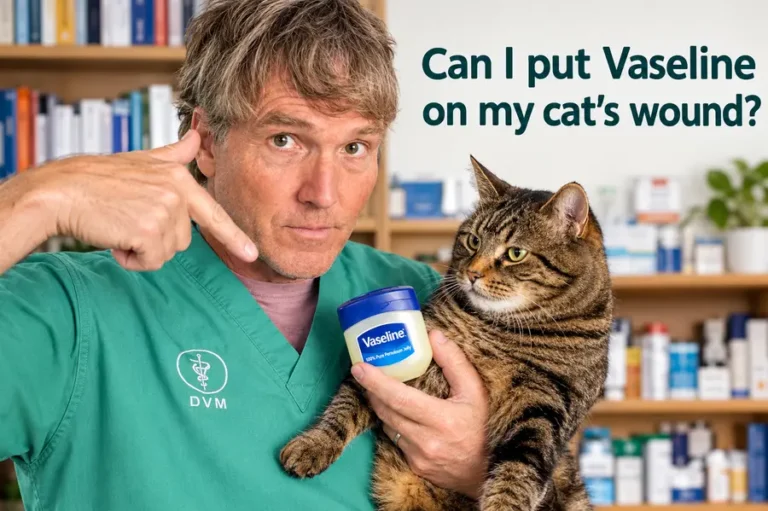


No, you should not apply Neosporin to your cat without veterinary guidance. Neosporin cannot help heal the wound. Cats may lick the ointment and ingest its ingredients, while some formulations contain additional medications that can be harmful. For minor wounds, gently clean the area with sterile saline and consult your veterinarian before applying any ointment.
Neosporin is not recommended for use on cats without veterinary supervision. It may cause allergic reactions in some cats, and licking the ointment can create stomach issues. The use of other pain-relievers in products is a further concern.
What Is Neosporin?
Neosporin is an over-the-counter antibiotic ointment made to prevent bacteria from infecting minor wounds, cuts, and burns. It is designed for human use and is available in various forms.
Typical triple antibiotic Neosporin contains three active ingredients:
- Neomycin: An antibiotic that is used to help treat some bacteria.
- Polymyxin B: An antibacterial drug that is effective against some gram-negative bacteria.
- Bacitracin: An antibiotic that helps prevent the growth of susceptible bacteria.
Certain formulations have different mixes of ingredients. Neosporin products for pain relief may also contain pramoxine, a local anesthetic that will temporarily relieve pain or discomfort.
Each of these ingredients serves a specific purpose, but not all of these are suitable for your cat. Some cats may respond differently to topical medications, particularly if they lick areas the cat has had treated and eat the product.
Neosporin is not effective against all types of wounds. If the injury is deep, a bite wound, or an abscess, and infected skin has occurred, a veterinarian may need to clean, drain, and/or treat the wound.
Before applying any antibiotic ointment, you need to understand the potential risks and determine whether your cat needs professional treatment.
Is Neosporin Safe for Cats?
Neosporin is not recommended for cats and should not be used as a first-choice medication without veterinary advice. Some topical antibiotics are prescribed for cats by vets, but it depends on the wound and your cat’s condition.
The main concern is that cats can develop allergic reactions to ingredients such as neomycin and polymyxin B. Your cat can also lick the ointment and ingest some of it as they groom.
A veterinarian may recommend a specific antibiotic ointment for a particular skin infection. That doesn’t mean you can use all of the human antibiotic products on your cat.
Consider these situations before treating your cat’s wound:
- Minor scratches: Clean the area gently with sterile saline or clean water. Ask your vet before applying an antibiotic ointment.
- Deep cuts or puncture wounds: Seek veterinary care because bacteria may remain beneath the skin.
- Bite wounds: Arrange a veterinary examination because small punctures can hide deeper tissue damage and infection.
- Red, swollen, or draining wounds: Contact your vet because your cat may need additional treatment.
- Wounds near the eyes: Seek veterinary guidance rather than applying a skin ointment.
If your cat has an open wound, avoid using human medications simply because you already have them at home. The wrong product may irritate the skin or delay appropriate treatment.
- Deep cuts or punctures: If there is bacteria under the skin, seek veterinary assistance.
- Bite wounds: Seek veterinary help, as a small wound may be a sign of a deeper wound infection.
- Wounds that are red, swollen, or leaking: See your vet, as your cat might require more treatment.
- Wounds in the eye area: Consult a vet before using a skin ointment.
Do not use human medication for your cat just because you have it at home if he has an open wound. The incorrect product could irritate the skin or slow down the proper treatment.
There are some health risks to using Neosporin on cats.
Depending on the ingredients, how much Neosporin is applied to your cat, the location of the wound, and your cat’s sensitivity, there are a number of issues that can arise when you apply Neosporin to your cat.
Health Risks Associated with Using Neosporin on Cats
Applying Neosporin to your cat can cause several problems, depending on the ingredients, amount applied, wound location, and your cat’s sensitivity.
1. Allergic Reactions
Some cats are allergic to, or sensitive to, topical antibiotics. Cats have known reactions to neomycin and polymyxin B.
Watch for these warning signs:
- Redness or swelling around the treated area
- Increased itching or scratching
- A new skin rash
- Swelling around the face
- Unusual breathing or sudden weakness
Discontinue use if a reaction occurs. Seek immediate veterinary attention and emergency veterinary care if your cat has trouble breathing or swelling in its face.
A published case series studied 61 cats who suffered from anaphylaxis due to ophthalmic antibiotic preparations. These reports were not related to the use of standard skin ointments, just eye medications, and they do not prove the risk from any or all of the types of Neosporin. But, they illustrate the importance of prudence when using antibiotic products in cats.
2. Stomach Upset After Licking the Ointment
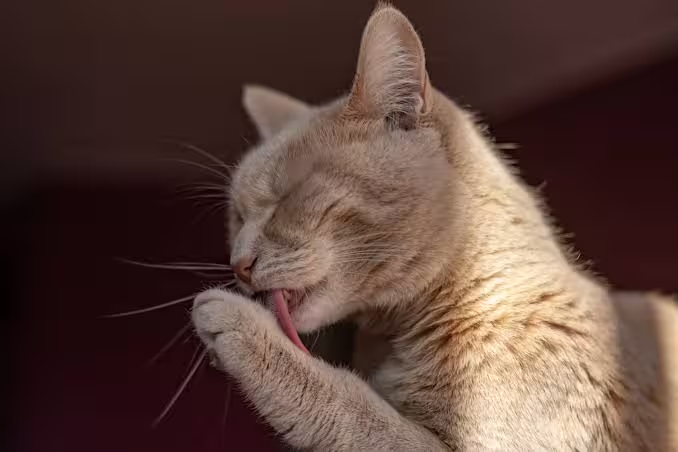
Cats lick and groom themselves regularly, and it may be hard to keep them from doing so when treated.
Neosporin could irritate your cat’s digestive system if it swallows some of the ointment. The signs may be vomiting, diarrhea, drooling, or loss of appetite.
Risk will vary depending on the formulation and quantity ingested. Don’t assume that every lick is harmless, but a small lick is not necessarily a serious poisoning.
3. Skin Irritation and Delayed Healing
If a cream or gel causes your cat to itch, rub, and/or become redder, this only makes the situation worse. Scratching and licking may occur, which will result in further damage.
Other wounds require professional cleaning and drainage in addition to topical antibiotics. Applying an unsuitable product can delay the treatment your cat actually needs.
4. Additional Risks From Pain-Relief Ingredients
Products that contain pain-relief components should be used with special care. These products may contain additional substances that are not appropriate for cats.
Avoid using products that have the same antibiotics as a regular ointment, simply because they are listed there. Please read the full ingredient list and ask your vet before using.
What Happens If a Cat Eats or Licks Neosporin?
If your cat licks Neosporin from its fur or wound, it will depend on the amount ingested and the type of Neosporin used.
A small lick may cause no noticeable symptoms or mild digestive upset. Larger exposures may create greater concerns, especially when the product contains additional active ingredients.
If a lick is small, it will be without symptoms or cause slight digestive upset. Higher exposures could present greater concerns, particularly if additional active ingredients are present in the product.
If your cat licks or eats Neosporin, follow this procedure.
- Take the ointment out of reach. Remove the tube and make sure your cat does not lick any residue.
- Check the product label. Determine the specific formulation and indicate if it has pain relief ingredients.
- Contact your veterinarian. Explain how much your cat may have swallowed, when it happened, and your cat’s approximate weight.
- Watch for symptoms. Look for vomiting, diarrhea, excessive drooling, appetite changes, or unusual behavior.
- Get immediate medical treatment for severe symptoms. If a dog has trouble breathing, collapses, or has swelling on the face, it is an emergency and should be taken to a veterinarian right away.
Never try to induce vomiting or try home remedies without veterinary supervision.
If the tube or packaging was swallowed by your cat, notify your veterinarian right away. Packaging might be another blockage hazard.
What is the severity of the exposure? The name of the product does not give an indication of risk. Have the packager’s information on hand for your veterinarian to review and give you the care that suits your dog’s needs.
What Can I Use Instead of Neosporin on My Cat?
The safest alternative depends on the type of wound your cat has. For a small, superficial wound, gentle cleaning may be enough until you can obtain veterinary advice.
1. Sterile Saline Solution
Sterile saline is a useful option for flushing minor wounds. It helps remove dirt and debris without exposing healing tissues to unnecessary chemicals.
Rinse the affected area with sterile saline (MSP). Avoid scrubbing the wound or forcing fluid into deep wounds.
2. Clean Water
If you do not have sterile saline, clean, lukewarm tap water is generally suitable for rinsing minor wounds.
Use a gentle flow and remove visible dirt without rubbing the injured tissue. If the wound is deep, bleeding heavily, or caused by an animal bite, seek veterinary care instead of relying on home cleaning.
3. Veterinary-Approved Wound Treatments
Your veterinarian may recommend a specific antiseptic, antibiotic, or wound-care product based on the injury.
Some products require careful dilution, and stronger concentrations can damage healing tissues. Do not apply chlorhexidine, iodine solutions, or other antiseptics without instructions about the appropriate product and concentration.
4. Prevent Your Cat From Licking the Wound
Licking can cause wound irritation and slow healing. You can obtain an Elizabethan collar that will help protect an injury if your cat continues to lick at it.
Don’t use tight bandages or makeshift dressings that could impede blood flow. The question is, should the wound be kept uncovered or should it be dressed with a protective covering? Ask your vet about this.
5. Know When Your Cat Needs a Vet
Home cleaning is not enough for every injury. Arrange a veterinary examination if you notice:
- Increasing redness, swelling, or warmth.
- Pus, unusual discharge, or a bad smell
- A wound that is deep, gaping, or not healing
- Significant pain or reduced activity
- Bleeding that does not stop with gentle, direct pressure
If bleeding is heavy or there is a major injury or signs of shock, go to an emergency room. Assessment early on can prevent complications and discover issues that topical ointments can’t fix.
FAQs
Are Cats Allergic to Neosporin?
Yes, cats can develop allergic reactions to ingredients in Neosporin, particularly neomycin and polymyxin B. Signs may include itching, redness, swelling, or facial puffiness. Stop using the product and contact your veterinarian if a reaction occurs.
How Much Neosporin Is Toxic to Cats?
There is no single amount that reliably determines toxicity for every cat and formulation. Risk depends on the ingredients, quantity swallowed, and your cat’s size and health. Contact your veterinarian if your cat ingests Neosporin, particularly a pain-relief version.
Is Neosporin With Pain Relief Safe for Cats?
No, you should not use Neosporin with pain relief on your cat unless a veterinarian specifically directs you to use that exact product. Some versions contain pramoxine, an additional active ingredient. Cats may lick the ointment, so veterinary guidance is important.
Is Neosporin Safe for Cats’ Eyes?
Do not apply ordinary skin Neosporin to your cat’s eyes. Eye problems require appropriate ophthalmic medication, and some antibiotic eye preparations can cause serious allergic reactions in cats. Contact your veterinarian if your cat has redness, discharge, squinting, or eye pain.
Can You Put Neosporin on a Cat’s Spay Incision?
Do not apply Neosporin to your cat’s spay incision unless your veterinarian specifically recommends it. Keep the incision clean and dry, prevent licking, and follow the postoperative instructions provided by your veterinary team. Contact your vet if the incision opens, becomes increasingly swollen, or develops discharge.
Does Neosporin Help Ringworm in Cats?
No, Neosporin does not treat ringworm because ringworm is a fungal infection, not a bacterial infection. Your veterinarian may recommend an appropriate antifungal treatment after examining your cat. Avoid applying ointments without guidance because they may be licked off or interfere with treatment.